

Injuries heal, but recovery can feel confusing. Some days you feel better, others – not so much. That up and down pattern is common.
In this guide, we explain a simple way to understand injury recovery, using three stages: Protection, Healing, and Recovery. You will learn what is normal at each stage, what usually helps, and when it is worth getting your injury checked so you can return to normal movement with confidence.
The 3 phases of injury repair
For the purpose of this article, in terms of Injury, think – a ligament tear (like a sprained Ankle), or some sort of muscle strain or tear – Hamstring, Lower Back etc
Protection
Due to inflammation, pain can peak over 1 to 3 days. You’ll be using Ice, painkillers, and resting from pain provoking activities to control this during this initial inflammatory stage.
Inflammation leads to swelling, and after about day 3, this puffy, watery-like swelling, will start to form a jelly-like consistency.
This will provide a protective cushion to the area, and limit joint and muscle movement, which is also protective.
Inflammation isn’t all bad though, for without an inflammatory response, healing will not occur.
Healing
Once you hit days 4-6 after injury, something amazing begins to happen. This jelly-like swelling starts to turn into scar tissue. Not quite like a scar that forms on your skin after surgery though.
This internal scarring is known as ‘adhesive scar tissue’, and it serves a very important purpose. If you’ve torn a ligament or muscle, by day 7-10, this adhesive scar tissue forms a patch over the tear, and then as it matures through weeks 3-4, starts to shrink and tighten to draw the two ends of the tear together. Much like producing your own internal stitching. Brilliant!
One problem though.
The body tends to form too much scar tissue.
This can end up slowing down recovery, bind and attach to things it shouldn’t, and cause all sorts of problems down the track.
Joints can seize up and become extremely stiff, and muscles can lose their inherent pliability and suppleness. Muscles can also develop weak spots around the area of scar tissue, making you prone to reinjury.
Scar tissue tends to be hypersensitive as well, causing lingering, annoying, and unnecessary pain.
All in all, the body uses scar tissue as a temporary patch, to promote healing, and also to make the area more sensitive on purpose to try and force you to protect it.
You become more aware of it, making you more careful and protective to avoid pain. Pain avoidance is simply a self-protective mechanism.
It works really well as a temporary patch, but we want the original tissue to reattach and bind together, leaving minimal scarring, to ensure a complete recovery.
By introducing the right treatment and exercise at the right time, we can minimise the scar tissue formation down to only what’s necessary, and stimulate the growth and reattachment of the original damaged tissue.
Recovery
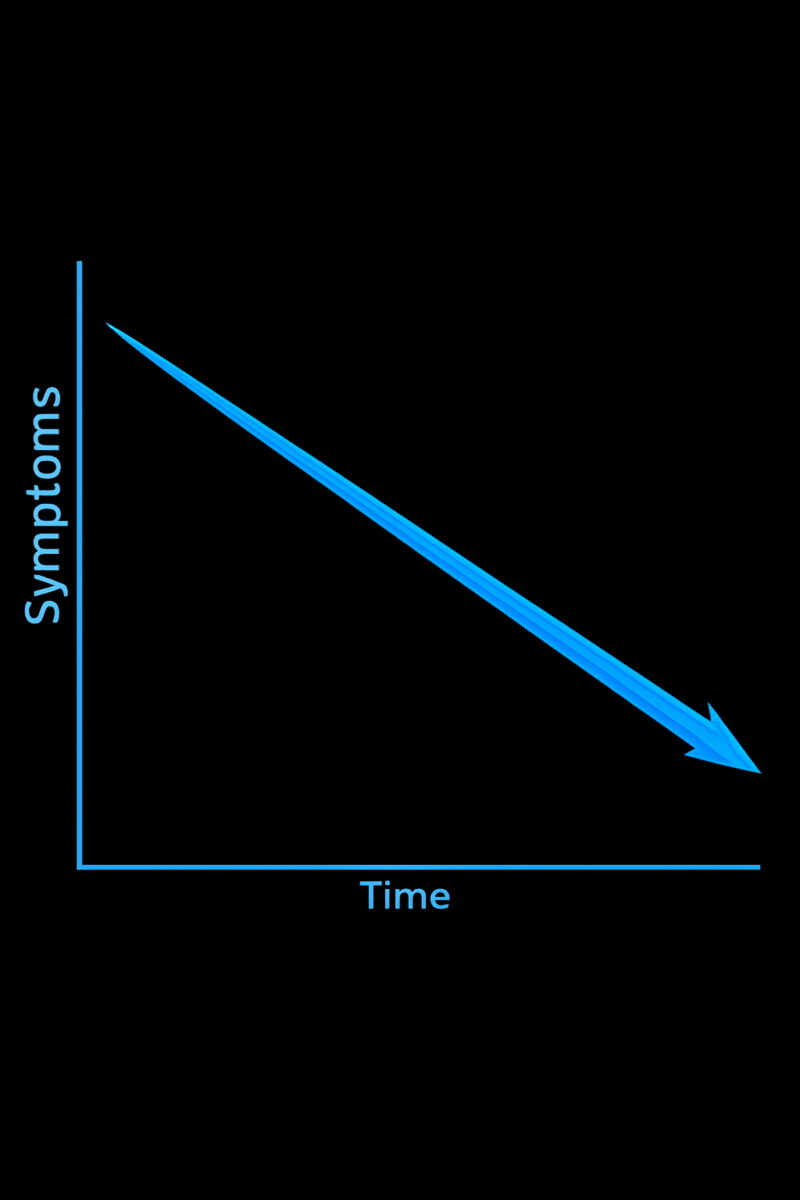
Recovery isn’t Linear. You don’t just improve as time goes by.
What I mean by that is you won’t feel like you’re getting better every single day, day after day after day. Recovery doesn’t work like this.
To accelerate your recovery back to full health, you’ll need to work on increasing your:
Mobility, Flexibility, and Strength.
That’s because you won’t fully recover with time and rest.
The injury will heal. But you won’t regain full strength of the damaged area. You need to apply stress, in a controlled manner, to stimulate your body to fully recover any lost mobility, flexibility and strength. This process typically takes around 6-8 weeks.
But your rehab has to follow a specific protocol and timeline. Try to strengthen too early and the tight bits will just get tighter. If you try and strengthen as soon as your mobility or movement improves, before returning to your normal level of flexibility (or ability to move a joint through its full range of motion), you’re at risk of placing excessive load through the injured area leading to an increase in symptoms, and a delayed recovery.
Put simply, we need to loosen the tight bits before we can strengthen the weak bits.
Ultimately a full recovery is all about strength. But we need to follow a particular process, and go through a series of steps to get there safely.
Your body is an adaptive machine. It will adapt and adjust to whatever you throw at it. It will also adapt to whatever you don’t throw at.
Don’t exercise – you’ll become weak and injury prone.
Exercise – and you’ll become stronger and less injury-prone.
Our unique process starts with…
The Recovery Rotations
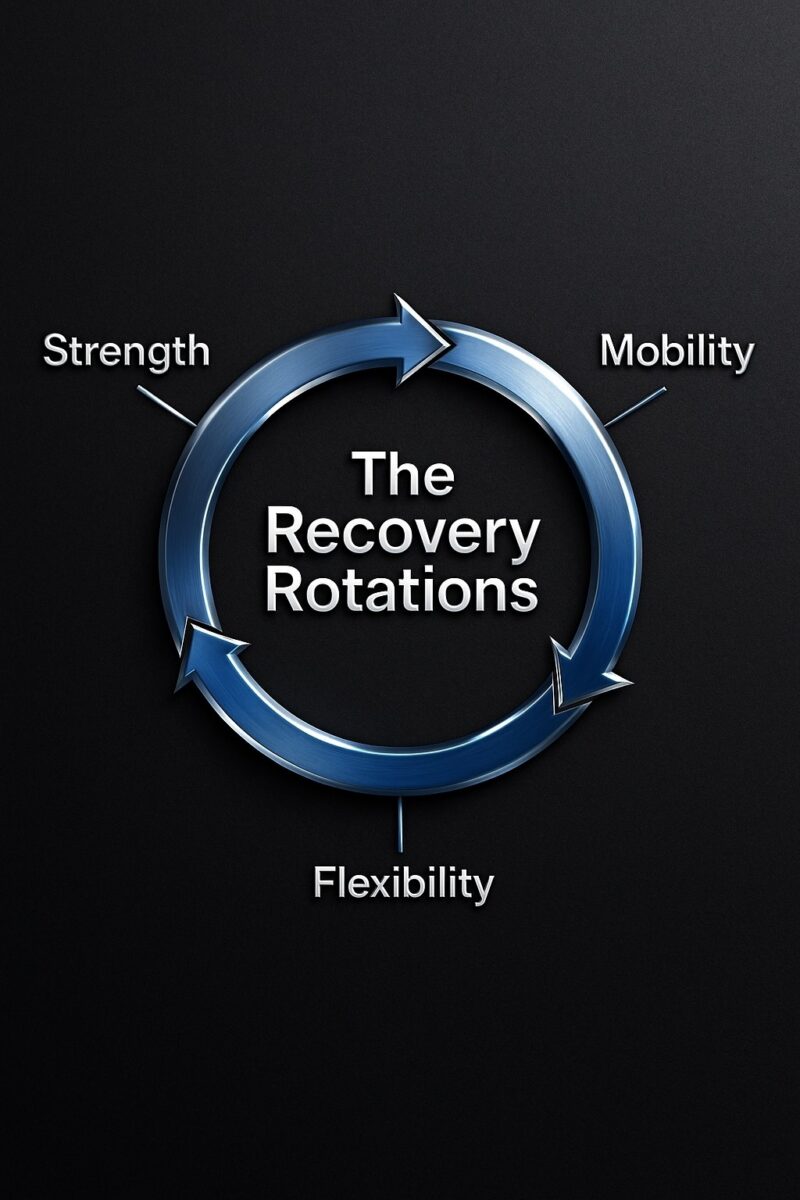
As you roll through the 3 main phases of recovery, of Mobility, Flexibility, and Strength, you’ll notice that after a while you can feel like the symptoms are getting worse!
3 steps forward, 1 or 2 steps back.
Very frustrating and annoying, until you understand how the body heals itself…
After you injure yourself, you might rest for a day or 2 and then start working on and pushing the Mobility of whatever it is you’ve injured.
As you start some simple mobility exercises or walking again after a sprained ankle, for example, you’ll start to introduce stress to the tightening soft tissue we see during the initial phase of the healing process.
This will irritate the inflamed, and tightened areas making your symptoms increase temporarily. Don’t worry though, you’re not causing more damage. You’re just starting to bring some normal movement back, in a controlled manner. All within a reasonably comfortable range of movement.
You’ll be decompressing the area, helping to reduce some swelling and increase blood flow to accelerate healing. You’ll also be starting the desensitisation process. The body will give you a bit of pushback, then relent as it doesn’t sense any more damage and realises what you’re doing is quite safe. Movement will then become soothing and relieving. You’ll look forward to it! And symptoms will start to settle again at an accelerated rate!
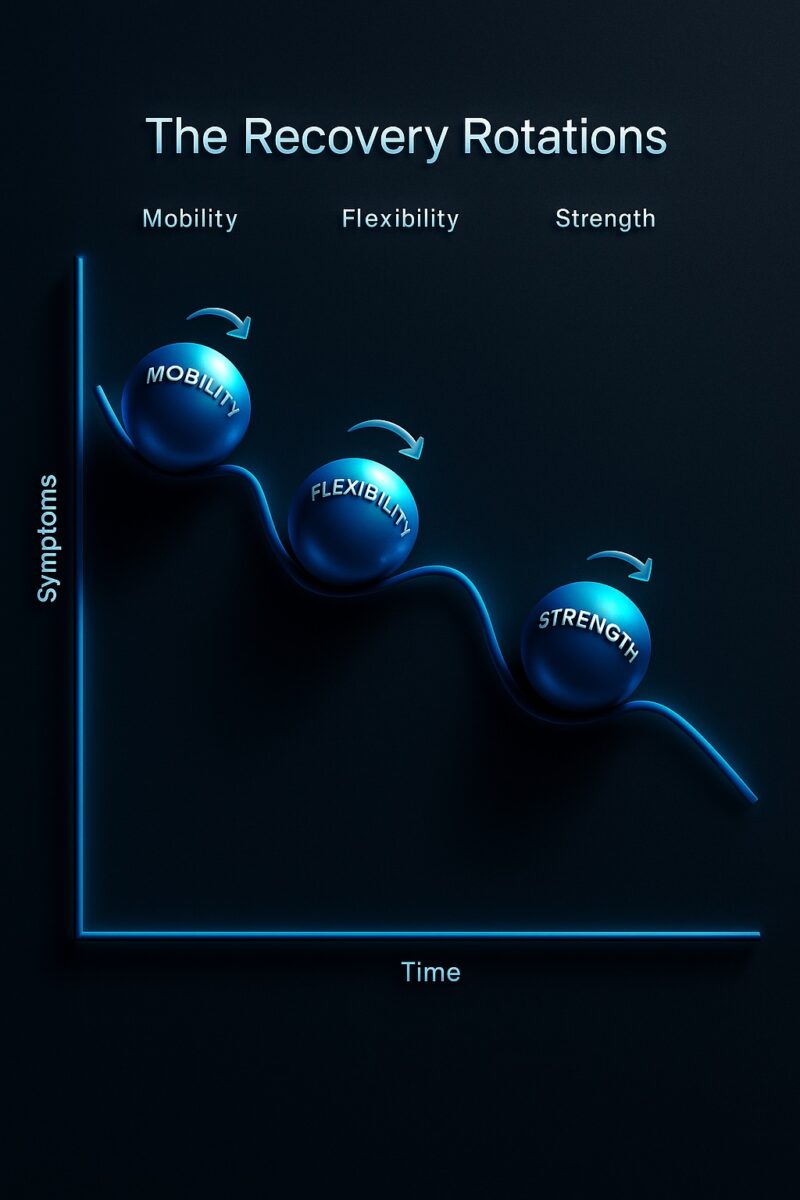
Next, we work on restoring the full normal range of movement by working on Flexibility.
And finally Strength.
However!
The first thing a muscle does when we apply some strength-based exercise to it is to tighten up. All muscles do this, injured or not. That’s why we need to work on mobility and flexibility first.
We need sufficient movement, suppleness, and flexibility to handle the tightening that occurs as we start the strengthening process. Jump straight to strength work and you’ll be in a whole world of pain.
As we transition from one phase to the next, symptoms can once again temporarily appear to worsen. It occurs in a cyclical pattern. Ebbs and flows. A good few days, or a week or so, followed by a flare-up.
We have a lot of control over it though. We know it’s going to happen, and can pre-empt it.
This is when the importance a well-timed intervention of physiotherapy, in combination with a systemised rehab program, becomes apparent and obvious.
In Summary
What to expect after an injury
In the first few days, pain and swelling are the body’s way of protecting the area. Over the next one to two weeks, the injured tissue starts to repair. After that, your job is to rebuild what was lost, which means restoring mobility, then flexibility, then strength.
Physiotherapy for injury recovery in Miranda and the Sutherland Shire
If you are in Miranda or the Sutherland Shire and you are unsure about what to do next following an injury or the onset of pain, a physio assessment can give you clear answers with a clear plan.
At PhysioCentral Miranda, our physios will guide you through the right mix of mobility, flexibility and strengthening at the right time, so your recovery keeps moving forward.
Ready to get started? Click that BOOK ONLINE NOW button at the top of the page, or call our friendly team on the number up top to organise an appointment.
For more details on the tightening phases and why they matter, read our article: The Healing Process of Soft Tissue Injuries: Understanding the Importance of Tightening Phases during Recovery
To understand how timing of treatment affects your recovery, see our post: Understanding Injury Recovery: A Simple Guide to Healing Phases and Treatment Timing.
Learn more about our services here: Physiotherapy Miranda & Sutherland Shire.