
Wrist and hand pain can be surprisingly disruptive.
It’s not just “a sore joint”. It can make basic tasks such as typing, lifting a kettle, opening jars, pushing up from a chair, training at the gym, gripping the steering wheel, or even sleeping comfortably feel difficult.
The tricky part is that the wrist and hand are complex. Pain can come from tendons, nerves, small joints, cartilage, or bone. Sometimes the location of your pain tells a strong story. Other times, it’s a mix of overload, irritation, and protective guarding.
At PhysioCentral in Miranda, we help people across the Sutherland Shire get clarity on what is driving their symptoms, calm it down, and rebuild confidence and strength in the hand and wrist.
What you need to know
Wrist and hand pain usually stems from a sprain or strain, tendon irritation (such as De Quervain’s), nerve irritation (such as carpal tunnel), cartilage issues (such as TFCC), or a ganglion cyst. If you fell on your hand and the pain isn’t settling, especially on the thumb side of the wrist, get it checked early. If you have numbness, tingling, weakness, or you’re dropping things, it’s also worth assessing sooner. Most non-fracture problems improve best with a phased plan: restore mobility first, then flexibility, then rebuild strength and grip capacity so it stays better. We’ll identify the cause of the pain and help you follow a clear plan to return to normal work, sports, and training.
On this page
- What you need to know
- Symptoms: what wrist and hand pain can feel like
- Where does it hurt? A quick guide
- Common causes of wrist and hand pain
- When to get it checked (and when it’s urgent)
- What to do at home in the early phase
- How we assess wrist and hand pain at PhysioCentral
- Treatment that works: our Mobility, Flexibility, Strength phases
- Common wrist and hand conditions we treat
- FAQs
- Wrist and hand pain treatment in Miranda
Symptoms: what wrist and hand pain can feel like
Wrist and hand pain is not always just “pain”. People commonly describe:
- Achy, sharp, pinching, or toothache-like discomfort
- Stiffness and loss of motion
- Weak grip or “giving way”
- Clicking, catching, or a sense of instability
- Pins and needles or numbness in the fingers
- Swelling or a visible lump on the back of the wrist (sometimes a ganglion cyst)
Where does it hurt? A quick guide
This table helps match common search intent to typical clinical patterns. It isn’t a diagnosis, but it helps you narrow down the possibilities.
| Where it hurts | Common pattern | Often associated with |
|---|---|---|
| Thumb-side wrist pain | Worse gripping, lifting a baby, wringing towels, opening jars | De Quervain’s (thumb tendon irritation) |
| Pinky-side wrist pain | Clicking, pain with push-ups, twisting, weight-bearing | Triangular Fibrocartilage Complex (TFCC), irritation/strain/tear |
| Palm side numbness/tingling | Worse at night, shaking the hand helps, weakness/clumsiness | Carpal tunnel syndrome |
| Central wrist pain after a fall | Pain, swelling, tenderness, reduced range | Sprain vs fracture (needs proper assessment) |
| A smooth lump near the wrist | May ache, may tingle if it presses on a nerve | Ganglion cyst |
Common causes of wrist and hand pain
Some of the most common causes include:
- Sprains and strains (including after a fall)
- Fractures
- Tendon overload and tenosynovitis (including de Quervain’s)
- Nerve compression (including carpal tunnel syndrome)
- Ganglion cysts
- Arthritis and joint irritation
- Cartilage or stability problems (including TFCC injuries)
- Repetitive strain or work-related overuse
When to get it checked (and when it’s urgent)
It’s worth getting assessed if:
- Your symptoms are lingering beyond a couple of weeks
- You keep “re-aggravating” it with normal life or training
- You have numbness or tingling, especially if it is worsening
- You are losing grip strength or dropping objects
Seek urgent medical care if you have:
- Sudden major weakness, abnormal colour, or concerning swelling
- Severe pain after trauma
- A visible deformity
- You heard a snap, grinding, or pop at the time of injury
EXOS casting (waterproof brace option)
If a fracture is confirmed and a cast or brace is appropriate, we can fit EXOS casting in the clinic, see details here: https://physiocentral.net.au/new-exos-casting-system-for-wrist-and-arm-fractures/
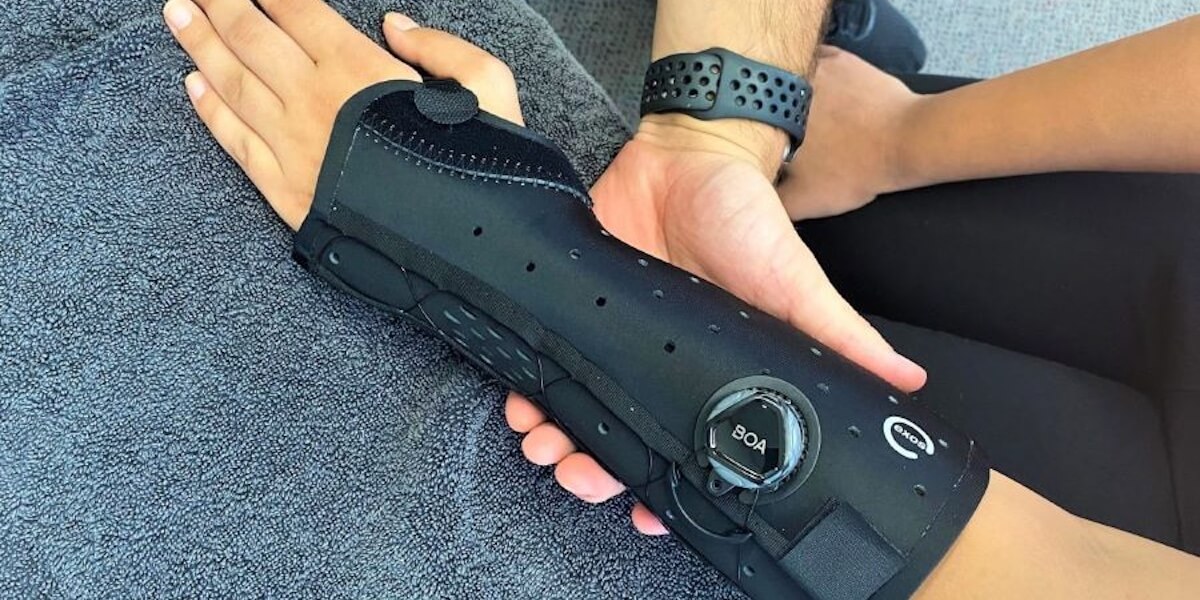
When you need immobilisation for a wrist or forearm fracture, we offer the EXOS thermoformable bracing system. It’s lightweight, waterproof, adjustable, and X-ray translucent.
What to do at home in the early phase
If this is a new strain or flare-up, the first goal is to settle irritability without letting the wrist stiffen up completely.
For many sprain-type injuries, general early advice includes:
- Rest from the most aggravating movements
- Ice for short periods
- Light compression if helpful
- Elevation when swollen
It can also be a good idea to follow the “NO HARM” idea early on (avoiding Heat, Alcohol, Running, and Massage in the first phase for sprain-type injuries).
If you suspect a fracture, or pain is severe after a fall, get it assessed promptly.
How we assess wrist and hand pain at PhysioCentral
A good wrist and hand assessment is more than “poke where it hurts”.
We typically look at:
- Your history (how it started, what flares it, night symptoms, work and sport)
- Range of motion (wrist, thumb, fingers, forearm rotation)
- Strength and grip (and which positions reproduce pain)
- Tendon and nerve sensitivity (for example, median nerve patterns in carpal tunnel)
- Joint and cartilage signs (including TFCC-style patterns on the ulnar side)
- Relevant upstream contributors (neck, shoulder, elbow, posture and load habits)
If we think imaging would change management (for example, after significant trauma), we’ll let you know.
Treatment that works: our Mobility, Flexibility, Strength phases
Phase 1: Mobility (calm it down, restore comfortable motion)
Early on we focus on:
- Reducing protective spasm and sensitivity
- Loosening up all the joints in the wrist, and restoring pain-limited motion without provoking it
- Helping you modify the few daily tasks that keep poking the sore spot
This phase matters because a stiff wrist is a painful wrist.
Phase 2: Flexibility (tendon glide, tissue tolerance, nerve friendliness)
Depending on the driver, we may use:
- Tendon-gliding style movement progressions (especially for thumb-side tendon issues)
- Forearm flexibility work (often overlooked)
- Gentle nerve mobility progressions if symptoms suggest nerve irritation (for example in carpal tunnel patterns)
Phase 3: Strength (grip strength, wrist control, load tolerance)
This is where most long-term wins happen.
- Progressive grip strengthening
- Wrist extensor and flexor strengthening
- Return-to-gym or return-to-work loading plans
- Sport-specific progressions (racquet sports, golf, gymnastics, weights)
For TFCC-type problems, rehab often includes graded strengthening and load management, and timelines are commonly in the 6 to 12 week range depending on severity and irritability.
For de Quervain’s, early treatment is aimed at reducing irritation and protecting the tendons, and many people improve over a 4 to 6 week window when managed early and consistently.
Common wrist and hand conditions we treat
Here are a few common conditions we see and treat often:
Carpal tunnel syndrome
Carpal tunnel syndrome happens when the median nerve is under pressure at the wrist. Symptoms often include tingling or numbness, pain, and weakness, and they are commonly worse at night. A wrist splint at night is a common first step your GP may recommend.
De Quervain’s (thumb-side wrist pain)
De Quervain’s causes pain on the thumb side of the wrist, often aggravated by gripping, lifting, and repetitive thumb use. A simple clinical test (Finkelstein-type positioning) can be part of assessment, and early treatment often settles symptoms within weeks when managed properly.
TFCC irritation or injury (pinky-side wrist pain)
TFCC problems often present with ulnar-sided (pinky-side) wrist pain, clicking/catching, pain with twisting, and discomfort with weight-bearing like push-ups. Many cases respond to a structured rehab plan including protection early, then strengthening and gradual loading.
Ganglion cyst
Ganglion cysts are smooth fluid-filled lumps commonly seen around the wrist and hand. Many are painless, but they can sometimes cause pain, tingling, or weakness if they press on nearby structures.
FAQs
How do I know if my wrist is sprained or broken?
If pain is severe after a fall, you heard a snap or grinding, the wrist looks abnormal, or you suddenly can’t use it normally, get medical assessment urgently. If it’s milder but not improving over time, a physio assessment can help guide next steps.
Why does my hand go numb at night?
Night numbness is often linked to nerve irritation or compression. Carpal tunnel syndrome is a common example, and symptoms can be worse at night and affect the thumb, index, and middle fingers.
Why is my pain on the thumb side of the wrist?
Thumb-side wrist pain is commonly linked to de Quervain’s, where thumb tendons become irritated as they pass near the wrist. It is often aggravated by gripping, lifting, and repetitive thumb use.
Why is my pain on the pinky side of the wrist?
Pinky-side wrist pain with clicking or pain during push-ups and twisting can match TFCC-type patterns. A proper assessment helps confirm whether it is the TFCC or another ulnar-side structure.
What should I do if I think I have carpal tunnel?
Start by reducing aggravating positions and loads, and consider assessment. A common medical recommendation is a wrist brace that keeps the wrist straight at night. The key is confirming the pattern and addressing contributors (work setup, swelling/irritation drivers, and strength).
Do ganglion cysts go away?
Some ganglion cysts can settle over time, especially if they are not being constantly irritated. They are usually benign, but you should still have any new lump checked to confirm what it is.
How long does wrist pain take to settle?
It depends on the cause. Some sprains improve in a couple of weeks, while tendon and stability problems often take longer. TFCC-type issues often require a structured 6–12 week rehab window, while de Quervain’s can improve within 4–6 weeks when managed early.
Can I keep training with wrist pain?
Often yes, but you may need smart modifications. For example, TFCC-type symptoms can flare with heavy wrist-loaded work like push-ups, so we usually adjust loading while keeping you active and progressing capacity safely.
Wrist and hand pain treatment in Miranda
If you want help figuring out what’s driving your symptoms and you would like a clear plan to resolve it and rebuild strength, our physio team at PhysioCentral in Miranda can help.
We see wrist and hand pain in:
- nerve-related numbness and tingling patterns
- office and work-related overuse
- gym and sport injuries
- thumb-side wrist pain
- post-fall sprains or fractures, with lingering wrist issues
If your symptoms are lingering, you keep re-aggravating it, or you’re getting numbness, tingling, weakness, or dropping things, it’s worth getting it assessed. We’ll help you identify what’s driving it, settle irritability, and follow a clear mobility to flexibility to strength plan so you can get back to normal work, training, and day to day life with confidence.
Graeme Curran, Physiotherapist
Founder. PhysioCentral
Related reading
If you’d like a deeper dive on common next steps (especially after a fall or fracture), these pages may help:
- New EXOS casting system for wrist and arm fractures — https://physiocentral.net.au/new-exos-casting-system-for-wrist-and-arm-fractures/
- Understanding injury recovery: healing phases and treatment timing — https://physiocentral.net.au/injury-recovery-process-healing-phases-treatment-timing/